Ensuring safety in the workplace is crucial, especially when heavy furniture like filing cabinets is involved. According to Jim Roberts, a safety expert with over 15 years of experience, "Stability is key to preventing accidents in office environments." His insights reflect the importance of knowing how to secure a heavy filing cabinet to prevent tipping.
Heavy filing cabinets can pose a significant risk. If not properly secured, they can tip over, causing injuries or damaging important documents. This is particularly a concern in busy offices where employees are frequently retrieving files. Installing anti-tip brackets is an effective method to stabilize these cabinets. Additionally, keeping heavier items on lower shelves can help maintain balance.
However, many people overlook the need for proper safety measures. They may assume that a sturdy cabinet will remain upright on its own. This misconception can lead to preventable accidents. Understanding how to secure a heavy filing cabinet to prevent tipping is essential for enhancing workplace safety. Taking proactive steps can not only protect employees but also create a more organized environment.
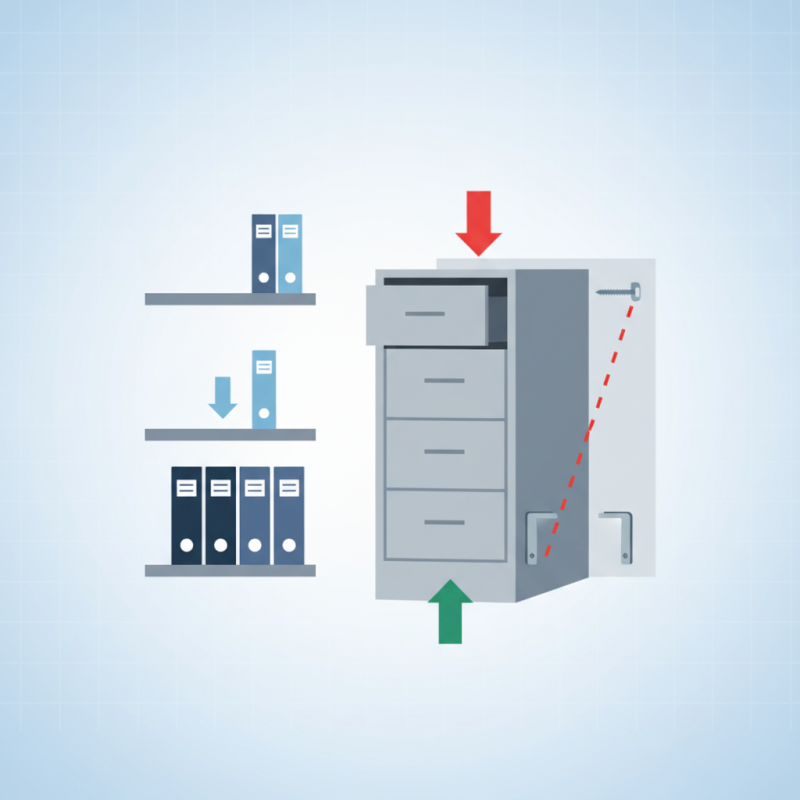
Heavy filing cabinets pose significant risks in workplaces and homes. A tipping cabinet can lead to serious injuries, especially to children or pets. The weight concentrated at the top can create instability. When drawers are opened, the cabinet's center of gravity shifts. This can cause it to toppling over easily.
Understanding these risks is essential for safety. Libraries and offices often have several cabinets, creating crowded spaces. Poor organization increases the likelihood of accidents. Sometimes, people overlook the importance of keeping cabinets properly anchored.
Many believe that weight alone provides stability, but this is a misconception. It's crucial to secure these cabinets to walls to prevent tipping.
Regular checks are also necessary. Over time, cabinets may become uneven due to wear or incorrect placement. Dust and debris can accumulate, affecting their stability. Business owners should prioritize safety measures. A safe environment leads to productivity and peace of mind. Investing time in securing these furnishings is a reflection of care for your workspace.
Choosing the right location for your filing cabinet is crucial in preventing it from tipping over. A stable, flat surface is essential. Data from the National Safety Council shows that improperly secured furniture causes thousands of injuries annually. Positioning the cabinet against a wall can significantly enhance its stability. This action creates a barrier, reducing the risk of it falling over.
Consider the surrounding area too. A cluttered workspace may lead to accidents. Keeping pathways clear is essential for safety. Reports indicate that many accidents occur when people attempt to access items on high shelves. If the filing cabinet is too tall, secure it to the wall using brackets. This simple solution can prevent accidents and injuries.
Evaluate the weight distribution inside the cabinet. Heavier items should be placed at the bottom. An unbalanced cabinet is far more likely to tip. Ideally, load files and materials so they are easily accessible. When items are unevenly distributed, it increases the risk. Always think about safety. Even minor adjustments can make a significant difference.
When it comes to securing a heavy filing cabinet, anti-tipping devices are essential. These devices help prevent the cabinet from toppling over, especially when drawers are opened. A properly braced cabinet can make a significant difference. Consider using brackets that attach the cabinet to the wall for stability. Wall-mounted options are straightforward to install and greatly enhance safety.
Another effective solution is to use weights. Adding weight to the base of the cabinet lowers the center of gravity. This approach can be beneficial in environments with high traffic or movement. However, consider the challenge of finding the right materials to use. Not all solutions are readily available, and some may require creative thinking.
Installing drawer interlocks can improve safety as well. These systems ensure that only one drawer opens at a time. While they may seem complicated, their installation can provide peace of mind. It’s not foolproof, but it minimizes risk. Even with these devices, checking for stability regularly is vital. The unpredictable nature of movement in busy spaces can test any setup.
A well-organized filing cabinet enhances stability and reduces the risk of tipping. Studies show that improperly organized cabinets can increase the chance of accidents by up to 30%. This statistic emphasizes the importance of arranging files thoughtfully. Start by placing heavier items on the bottom shelves. This lowers the center of gravity. Lighter files can go on top.
Categorizing documents into folders can also improve stability. Use labeled folders and keep similar items together. This not only organizes your space but makes retrieval simpler. A research report revealed that a clutter-free environment increases productivity by 15%.
Regularly assess the contents of your cabinet. Remove outdated documents to maintain an optimal weight distribution. Remember, the ideal filing cabinet is not just about storage. It's also about ensuring safety in your workspace. Adopting these organization tips may not be perfect, and adjustments may be necessary. Regular reflection on cabinet usage can lead to better organization and improved safety.
When it comes to securing a heavy filing cabinet, regular maintenance and safety checks become essential. A study by the National Safety Council highlights that improper storage can lead to accidents and injuries. It's surprising how many facilities overlook this vital aspect. Assessing the stability of cabinets is crucial, especially in workplace environments with heavy file loads.
One effective tip is to conduct monthly inspections. Check for any signs of wear and tear, such as loose screws or uneven wheels. These small observations can prevent larger problems. A report from the Occupational Safety and Health Administration (OSHA) suggests that 20% of filing cabinet accidents stem from lack of maintenance. Staying proactive can make a difference.
Additionally, ensure that filing cabinets are anchored to the wall. This method is recommended for cabinets over 36 inches tall. In settings where drawers are frequently opened, a weight distribution assessment is necessary. Balancing heavier items on lower shelves can also enhance stability. Make sure to keep the cabinet organized. Clutter increases the risk of tipping. Regularly review and declutter files, as it's easy to overlook old paperwork.
| Maintenance Task | Frequency | Safety Check Description | Notes |
|---|---|---|---|
| Inspect for Damages | Monthly | Check for dents, scratches, and loose hardware. | Report any severe damage immediately. |
| Check Levelness | Quarterly | Ensure the cabinet is level to prevent tipping. | Use a level tool for accuracy. |
| Secure with Anchors | Bi-annually | Install anchors to the wall if needed. | Use appropriate anchors for material type. |
| Organize Contents | Monthly | Keep heavy items at the bottom and light items at the top. | Modify layout for optimal weight distribution. |
| Review Safety Policies | Annually | Ensure everyone understands safety protocols. | Provide training if necessary. |
: Heavy filing cabinets can tip over, leading to serious injuries, especially to children and pets.
Anchoring prevents cabinets from tipping over by stabilizing them against walls, which is often overlooked.
Cabinets may become uneven over time due to wear, misuse, or accumulation of dust and debris.
Anti-tipping devices help prevent cabinets from toppling, particularly when drawers are opened.
Place heavier items on bottom shelves and lighter items on top to lower the center of gravity.
Drawer interlocks allow only one drawer to open at a time, reducing the risk of tipping.
Regular checks are necessary, especially in busy environments where movement can affect stability.
Adding weights to the base can help; however, finding suitable materials may require creative thinking.
A clutter-free environment can boost productivity by simplifying document retrieval and enhancing focus.
No, the ideal cabinet setup needs regular assessment and adjustments to ensure ongoing safety and organization.
To ensure safety in the workplace, it's crucial to learn how to secure a heavy filing cabinet to prevent tipping. Understanding the risks associated with unstable cabinets is the first step; they can pose significant hazards if not properly secured. Choosing an ideal location—preferably on level ground and away from high-traffic areas—is essential for stability.
In addition, utilizing anti-tipping devices and accessories can provide further protection against accidental toppling. Organizing the cabinet efficiently, by distributing weight evenly and keeping heavier items on lower shelves, enhances stability. Finally, regular maintenance and safety checks are vital to ensure that the filing cabinet remains secure over time. By following these guidelines, you can significantly reduce the risk of accidents and maintain a safe environment.

Jaydee furniture