Holiday entertaining feels warmer when a buffet and hutch look collected, useful, and personal. This guide explores China Top 10 Holiday Buffet and Hutch Decor Ideas for festive homes, family dining rooms, and welcoming guest spaces. It focuses on practical styling rather than expensive displays.
Interior designer Joanna Gaines has said, “A home should be a reflection of the people who live in it.” Her observation explains why the best holiday arrangements include meaningful pieces. Display blue-and-white porcelain, carved wooden trays, red ceramic bowls, or inherited serving plates. Add evergreen branches, dried orange slices, and warm candlelight for texture. Leave breathing room between objects. Crowded shelves quickly lose their charm.
Learning How to decorate a buffet and hutch for the holidays also requires careful balance. Place taller items near the back, then layer smaller dishes in front. Use brass candleholders beside white porcelain for gentle contrast. A woven runner can soften a dark cabinet. In Chinese-inspired interiors, red accents, ceramic vessels, and jade-green details create a festive connection without looking forced.
Keep it practical.
The buffet should still hold plates, drinks, and serving utensils. Avoid fragile decorations near busy corners. Not every arrangement will look perfect, and that is worth remembering. A slightly uneven branch or handmade ornament can make the room feel lived in. Step back, remove one unnecessary item, and check the display under evening light. Holiday decor should invite conversation, not demand constant adjustment.
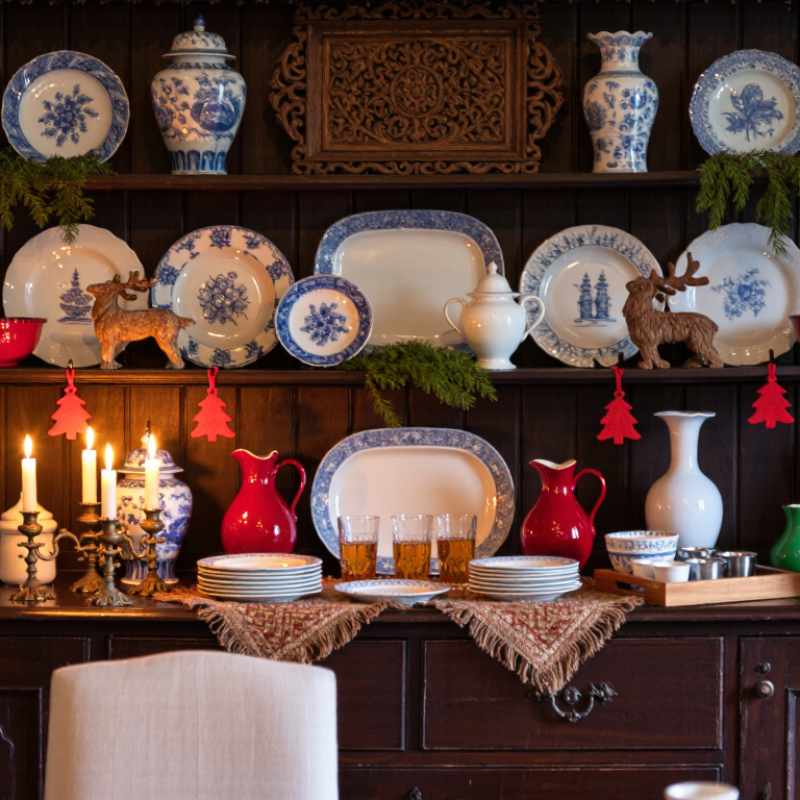
China Top 10 Holiday Buffet and Hutch Decor Ideas?
A beautiful holiday buffet begins with accurate measuring, not decoration. The NKBA’s 36-inch clearance rule provides a practical planning standard around dining furniture. Keep at least 36 inches between the buffet and nearby chairs, tables, or walls. This space lets guests walk comfortably and open drawers safely. Measure the room when chairs are pulled out. A narrow walkway may look acceptable when empty. It can feel crowded during dinner.
Use the buffet as a calm visual anchor. Place seasonal dishes, folded napkins, and low greenery across its surface. Keep tall decorations near the wall, where they will not block conversation. A hutch can display serving bowls, glassware, and small holiday accents. Leave some open space. Too many objects make cleaning difficult and reduce useful storage. In my experience, symmetrical placement looks polished, but slight variation feels more welcoming. I sometimes overdecorate first, then remove half the pieces.
Tips: Mark the 36-inch path with painter’s tape before styling. Walk through it while carrying a tray. Check cabinet doors and drawers fully. Leave extra room near corners and doorways. If the arrangement feels tight, trust the measurement rather than the picture. People need space. Safety matters more than visual fullness.
For a holiday buffet or hutch, warm light between 2700K and 3000K makes wood, porcelain, and brass feel inviting. I prefer 2700K for candlelit rooms and 3000K when the furniture has cooler white china. Test one bulb at night. Daylight can mislead. A high color-rendering bulb helps red berries and green branches look more natural, not muddy.
Build the display in three visible levels: low, middle, and high. Place a runner and shallow dishes on the low level. Add a cake stand, lidded jar, or small arrangement at the middle level. Let one taller branch, framed print, or narrow vase rise behind it.
Keep the tallest piece near one side, rather than directly in the center. This creates movement and leaves room for serving plates.
I once raised every object to the same height, and the hutch looked stiff. The fix was simple, though not perfect: remove two pieces and lower the rest. Leave breathing space around handles and cabinet edges. Hide lighting wires behind the furniture, and keep heat-producing fixtures away from greenery, paper, and fabric. A dimmer can soften the scene. In my experience, layered light feels more polished than one bright ceiling fixture. One small lamp may be enough.
Use the sideboard’s height, not its limited width. For a 90–120 cm sideboard, place daily dishes in the lower cabinets. Store serving bowls in one removable tray. This keeps holiday meals easier to prepare. A narrow upper shelf can hold folded runners, candles, and small ornaments. Leave clear space above the surface.
Create a flexible buffet station with shallow containers. Choose pieces under 25 cm deep, so drawers and doors remain usable. Group chopsticks, napkins, and small utensils by function. I once placed everything in one large box. It looked tidy, but finding items became frustrating. Divided storage works better, although it takes longer to arrange.
Treat the wall area as a light hutch. Install one or two secure shelves above the sideboard, then display porcelain bowls, red paper decorations, or glass jars. Keep heavier objects below. In homes with children or pets, anchor tall furniture and avoid unstable stacks. This is practical, not merely decorative.
Measure the sideboard, wall clearance, and door swing first. Keep at least 10 cm between decor and serving areas. Use washable mats under hot dishes. Test the arrangement with empty containers before the holiday. It may feel sparse. That is often safer and more useful.
A well-styled Chinese buffet or hutch can feel collected rather than crowded. Idea 6 is to pair Chinese porcelain with open shelving. Place two blue-and-white vases at different heights, then add a small dish between them. Leave visible space around every piece. This breathing room makes the glaze and painted details easier to appreciate. In my decorating experience, uneven groupings usually look more natural than identical rows. One mistake is common: using too many patterns together. The display becomes noisy.
Idea 7 focuses on lacquer accents. A black or deep red lacquer box can anchor the middle shelf, especially beside pale porcelain. Its polished surface reflects nearby light and adds depth. Use one substantial lacquer object instead of several small ones. A folded textile beneath it can prevent sliding and soften the hard materials. Check the shelf’s weight capacity before arranging anything. Practical details matter.
Idea 8 is about red and gold balance. Red brings warmth, while muted gold adds a restrained festive note. Try a narrow red vessel with one aged-gold ornament nearby. Avoid matching every object. That can look staged. I prefer slightly imperfect symmetry, such as a taller vessel on one side and a low ceramic bowl on the other. Natural daylight should guide the final placement. Artificial lighting may make gold appear harsher than expected. Step back, adjust, and accept that the first arrangement may not be the best.
A practical styling guide for creating a festive Chinese-inspired buffet or hutch display with authentic materials, balanced color, and safe arrangement principles.
| Idea | Decorative Focus | Recommended Materials | Color Balance | Arrangement Method | Best Holiday Use | Practical Notes |
|---|---|---|---|---|---|---|
|
Idea 6 Porcelain Plate Gallery |
Create a layered focal point using decorative Chinese porcelain plates, especially pieces featuring floral, landscape, or auspicious motifs. | Porcelain plates, ceramic stands, a wooden or lacquered backing panel, and removable plate hangers. |
Use blue-and-white porcelain as the visual foundation, then introduce small accents of
Chinese red and muted gold.
Suggested ratio: 50% blue-white, 30% red, 20% gold or neutral tones.
|
Position the largest plate near the center or slightly above eye level. Place smaller plates in a symmetrical or gently staggered arrangement, leaving even spacing between pieces. | Lunar New Year, Mid-Autumn Festival, family celebrations, and formal holiday dinners. | Porcelain is hard and non-porous but can chip at the rim. Use stable stands, avoid overcrowding, and keep plates away from the front edge of the furniture. |
|
Idea 7 Lacquered Layering |
Add depth with lacquered trays, boxes, or panels behind porcelain and small seasonal objects. | Traditional lacquerware, finished wood, porcelain vessels, silk-textured fabric, and metal or ceramic ornaments. |
Let deep red lacquer provide the dominant warm tone. Balance it with controlled touches of
gold, cream, black, or dark brown rather than adding many bright colors.
Suggested ratio: 45% red, 25% dark wood or black, 20% cream, 10% gold.
|
Place a large lacquered panel or tray at the back, medium-height porcelain in the middle, and low accessories in front. Use odd-number groupings such as three or five objects. | Entryway displays, dining-room hutches, buffet cabinets, and holiday entertaining areas. | Lacquer surfaces can be sensitive to prolonged moisture, heat, and strong sunlight. Dust with a soft dry cloth and avoid abrasive cleaners or rough decorative bases. |
|
Idea 8 Red-Gold Contrast with Neutral Space |
Build a festive but refined composition around red and gold accents while preserving open space so the display remains visually calm. | Red ceramic vases, gold-tone metal accents, porcelain bowls, natural wood risers, linen runners, and warm-white lighting. |
Combine rich red with warm metallic gold, then soften the arrangement with ivory, natural wood, or charcoal.
Suggested ratio: 35% red, 20% gold, 30% neutral materials, 15% dark grounding accents.
|
Anchor one side with a taller vase or branch arrangement and balance it with a lower bowl or porcelain cluster on the opposite side. Keep approximately one-third of the surface visually open. | New Year gatherings, winter holidays, buffet service, and compact hutch displays. | Warm-white lighting usually complements red and gold more gently than cool-white light. Keep candles, heat sources, and electrical cables away from lacquer, fabric, and paper decorations. |
Idea 9: Give the china hutch a warm holiday glow without crowding its shelves. Place candles on the buffet surface, not inside the hutch, where heat can affect wood, glass, or fabric. Follow the National Candle Association’s 12-inch safety rule: keep every lit candle at least 12 inches from decorations, curtains, paper, and other burnable materials. Measure from the flame, not the candle holder. This small detail is easy to miss.
Use three candle holders at different heights, leaving clear space around each flame. Choose sturdy holders with wide bases. Keep them away from serving plates, napkins, and passing sleeves. Never place a candle behind tall greenery, because the flame may disappear from view. Real flames look beautiful. They also demand attention. Flameless candles can create a similar effect near porcelain figurines or hanging ribbons.
Idea 10: Build a safer holiday focal point with light, texture, and restraint. Layer a folded runner, a low bowl of ornaments, and one central candle arrangement. My first display looked attractive but felt too crowded. The decorations nearly touched the flame. I removed half of them, and the buffet looked calmer. Check the setup before guests arrive. Keep matches and lighters out of children’s reach, and never leave burning candles unattended. A quick airflow check matters too; a nearby vent can bend the flame toward decorations.
Keep at least 36 inches between the buffet and nearby chairs, tables, or walls. Measure with chairs fully pulled out. A walkway can look fine when empty but feel crowded during dinner. Safety matters more than visual fullness.
Mark the walking path with painter’s tape. Walk through it while carrying a serving tray. Open every drawer and cabinet fully. Check corners and doorways too. Trust the measurement.
Place daily dishes in the lower cabinets. Keep serving bowls together in one removable tray. Use a narrow upper shelf for runners, candles, and small ornaments. Leave clear space above the surface.
Use shallow containers under 25 centimeters deep. Group chopsticks, napkins, and utensils by function. Divided storage works better than one large box. It takes longer to arrange.
One or two secure shelves can create a light hutch above the sideboard. Display bowls, red paper decorations, or glass jars. Keep heavier objects below. Anchor tall furniture when children or pets are present.
Place two blue-and-white vases at different heights. Add a small dish between them. Leave visible space around each object. Uneven groupings often feel more natural than identical rows. Too many patterns look noisy.
Use one black or deep-red lacquer box as a strong focal point. Place it beside pale porcelain. A folded textile underneath can reduce sliding. Check the shelf’s weight capacity before decorating. Practical details matter.
Pair one narrow red vessel with a muted-gold ornament. Avoid matching every object. Try a taller vessel on one side and a low bowl on the other. Natural daylight may reveal better placement. The first arrangement may be wrong. Adjust it.
How to decorate a buffet and hutch for the holidays begins with careful planning. Measure the space first and preserve about 36 inches of clearance for comfortable movement. Choose warm 2700–3000K lighting to create a welcoming atmosphere, then add layered decorations at varied heights so the display feels balanced rather than crowded. For smaller homes, make the most of a 90–120 cm sideboard by using trays, stackable dishes, compact baskets, and the hutch shelves for organized seasonal storage.
Create a distinctive festive look by combining Chinese porcelain, lacquer details, and carefully balanced red-and-gold accents. Keep stronger colors focused in a few areas while allowing neutral space to maintain visual calm. Finish with safe candle placement, keeping candles at least 12 inches away from decorations, fabric, and other combustible materials. With thoughtful spacing, practical storage, warm illumination, and culturally inspired details, a buffet and hutch can become an elegant and functional holiday centerpiece.

Jaydee furniture