Choosing the 2026 best lighting for a recessed medicine cabinet requires more than selecting the brightest LED strip. The mirror reflects every mistake. Harsh ceiling light can deepen facial shadows, while a weak cabinet lamp may make shaving or makeup application frustrating.
So, what is the best lighting for a recessed medicine cabinet? In most bathrooms, evenly distributed, front-facing light works best. Vertical lights on both sides reduce shadows around the nose, chin, and eyes. A cabinet with integrated LEDs can also work well, especially when it offers high color rendering, preferably a CRI of 90 or higher. Neutral white light around 3500K often shows skin tones naturally without feeling too blue.
Dr. Mariana Figueiro, a respected lighting researcher, has stated, “Light is the most powerful synchronizer of the circadian system.” Her research reminds us that bathroom lighting affects more than appearance. A bright, cool lamp at night may feel unpleasant and disruptive. A warmer, dimmable setting can create a calmer evening routine.
Details matter. Look for diffused lenses, low-glare output, and moisture-resistant construction. Confirm the cabinet’s electrical requirements before installation. Professional guidance remains important around bathroom wiring.
No fixture is perfect. A cabinet may provide excellent facial light but still leave the floor dim. Another may look elegant but create reflections across the mirror. This guide compares brightness, color accuracy, glare control, energy use, and practical installation concerns. The ideal choice should make daily tasks easier, not simply make the bathroom brighter.
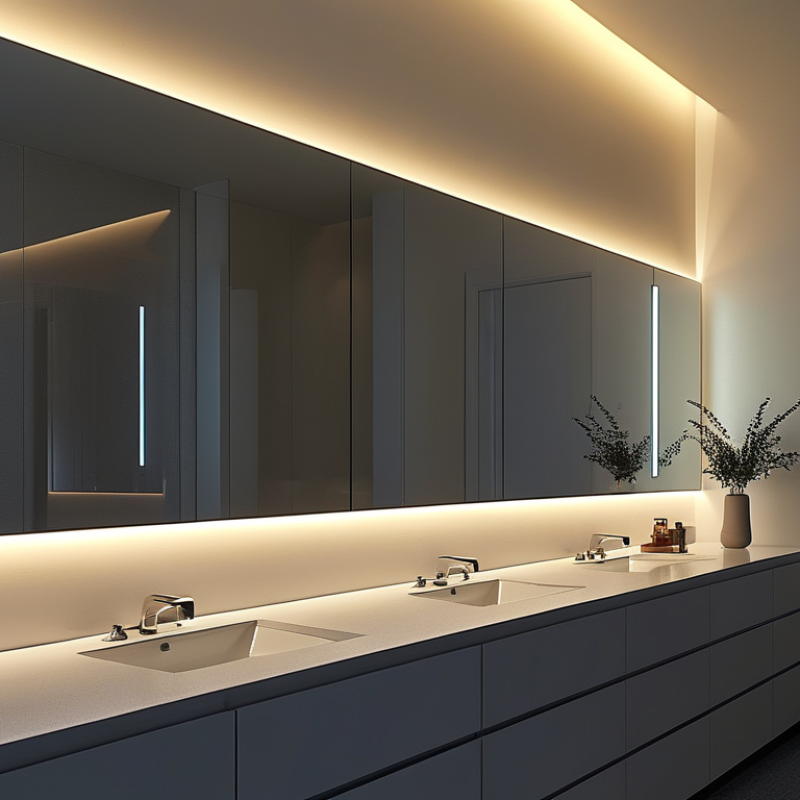
For a recessed medicine cabinet, the best lighting usually comes from both sides of the mirror. Vertical fixtures reduce shadows across your eyes, nose, and chin. A ceiling light alone often leaves the face looking uneven. That mistake is common. Choose LEDs with a color rendering index, or CRI of 90 or higher. Skin tones will appear more natural. Neutral white light around 3500K to 4000K works well for shaving, skincare, and makeup.
Mount each vertical light near eye level, with the center close to the user’s face height. Keep the light source slightly forward from the cabinet door when possible. This helps prevent deep shadows inside the recessed opening. If side space is limited, use continuous lighting around the cabinet perimeter.
For many bathrooms, 800 to 1,500 total lumens is a practical starting range. The exact need depends on cabinet width and wall color. A dimmer adds control. Brighter is not always better.
Use fixtures rated for damp bathroom locations, such as an appropriate moisture rating. A qualified electrician should confirm wiring, clearances, and local requirements. The cabinet door can also reflect glare, especially with glossy surfaces. Frosted lenses usually feel softer. I would avoid choosing lights by appearance alone. A slim fixture may look elegant but still create harsh highlights. This is where the design can fall short. Test the light at night, when surrounding daylight cannot hide problems. Minor adjustments often matter more than expensive hardware.
For a recessed medicine cabinet, LED selection starts with the task, not appearance. A 90-plus CRI rating helps skin tones, shaving areas, and makeup colors look more trustworthy. Standard LED modules usually provide efficient, even light. Edge-lit panels can look slim, but their output may feel flatter at the mirror. Back-lit designs often create stronger depth and fewer dark patches. Still, construction matters more than the label. Check diffuser quality, heat management, and whether replacement parts are available. I have seen bright cabinets with harsh corners because the light sat too close to the face. That detail is easy to miss in a product photo.
Color temperature changes the room’s mood and your visual accuracy. Around 3000K feels warm and comfortable, but it can make white surfaces appear slightly yellow. A range from 3500K to 4000K often gives a clean bathroom appearance without making skin look gray. Cooler settings can sharpen contrast, yet they may expose every shadow. Brightness should match cabinet depth and room lighting. For many bathrooms, 800 to 1,500 lumens works as a practical starting range. A dimmer is useful, especially before sunrise. Look for smooth dimming, low flicker, and a damp-location rating. Do not confuse lumens with lux; lux describes light reaching the face. I prefer testing the mirror at standing distance, because specifications cannot show glare perfectly. My own first choice was too cool. It looked modern, but tired skin looked worse. A small compromise may be the better daily decision.
| LED Type | Typical Color Temperature | Color Rendering (CRI) | Practical Brightness Range | Typical Efficacy | Light Quality in a Bathroom | Dimming and Control | Heat and Service Life | Best Use | Overall Assessment |
|---|---|---|---|---|---|---|---|---|---|
| Standard white LED | 3000K–4000K | 80–89 CRI | 800–2,000 lumens for a medium cabinet installation | 80–120 lm/W | Efficient and widely available, but skin tones and cosmetic colors may look less accurate than with high-CRI lighting. | Usually compatible with compatible-phase dimmers; confirm the driver and dimmer pairing before installation. | Low operating heat when properly ventilated; quality modules commonly have an estimated 25,000–50,000-hour rated life. | General grooming where cost and efficiency are the main priorities. | Good value |
| High-CRI LED | 3000K–4000K | 90+ CRI; look for strong red rendering when available | 800–2,000 lumens for a medium cabinet installation | 70–110 lm/W | Shows skin tones, makeup shades, and small color differences more naturally than standard 80-CRI lighting. | Available in dimmable versions; the LED driver must be rated for the selected dimming method. | May produce slightly more heat than a lower-CRI module at the same output; use a suitable heat sink and enclosed-fixture-rated components. | Shaving, makeup application, skincare, and color-sensitive grooming. | Best for accurate appearance |
| Tunable white LED | Approximately 2700K–6500K | Typically 80–95 CRI, depending on the module | 600–1,800 lumens, depending on the selected color setting | 60–100 lm/W | Can shift from warm evening light to cooler task light, but color quality may change across the tuning range. | Requires a compatible controller, two-channel driver, or proprietary control system; installation is more complex. | More electronics can increase system complexity; provide ventilation and follow the driver temperature rating. | Bathrooms used at different times of day or by users who want adjustable ambience. | Most flexible |
| Integrated LED edge lighting | 3000K–4000K | 80–90+ CRI | 500–1,500 lumens for a medium cabinet | 70–110 lm/W | Produces a clean, space-saving appearance and can distribute light evenly around the mirror when designed correctly. | Often uses a dedicated low-voltage driver; dimming depends on the cabinet electronics. | Heat is spread through the cabinet frame or backing; non-replaceable modules may require service or component replacement later. | Modern recessed cabinets where a slim, integrated appearance is important. | Best for clean integration |
| LED strip or tape lighting | 2700K–4000K | 80–95+ CRI | 300–1,200 lumens per meter, depending on LED density and power | 60–100 lm/W | Flexible for perimeter or interior shelf lighting, but exposed points can create glare and uneven brightness. | Requires a correctly sized low-voltage power supply; dimming is generally practical with a compatible controller. | Needs an aluminum channel or other heat-spreading method for longer service life; moisture-resistant construction is recommended. | Custom cabinet layouts, shelves, side illumination, or accent lighting. | Good for customization |
| COB LED module | 2700K–4000K | 80–95+ CRI | 600–1,500 lumens per module, depending on size and power | 80–130 lm/W | Provides a visually continuous light source with fewer visible dots than conventional LED strips. | Requires a compatible constant-current or constant-voltage driver, depending on the module design. | Needs effective thermal contact with a heat sink; operating temperature strongly affects long-term reliability. | Compact, concealed lighting where smooth output and high brightness are required. | Strong compact option |
| Cool white LED | 4000K–5000K | 80–90+ CRI | 800–2,000 lumens for a medium cabinet installation | 90–130 lm/W | Appears crisp and energetic, but above 4000K it can look stark in a small bathroom and may emphasize shadows or imperfections. | Commonly available with dimming, subject to driver compatibility. | Generally efficient with low heat relative to older light sources; use components rated for enclosed spaces. | Bright task lighting in bathrooms with limited natural daylight. | Use selectively |
| Warm white LED | 2700K–3000K | 80–95+ CRI | 600–1,500 lumens for a medium cabinet installation | 70–110 lm/W | Comfortable and flattering, but very warm light can make precise grooming and color matching less reliable. | Usually easy to dim when paired with a compatible driver. | Low heat and good efficiency; confirm the module is suitable for the cabinet enclosure. | Relaxed evening use and bathrooms designed with warm interior finishes. | Comfortable, less neutral |
| Selection Dimension | Recommended Range or Feature | Why It Matters | What to Check Before Buying |
|---|---|---|---|
| Color temperature | 3500K–4000K for balanced grooming light | This range usually provides a neutral appearance without the excessive blue cast of very cool light or the strong amber cast of very warm light. | Check the actual CCT specification rather than relying only on labels such as “natural” or “daylight.” |
| Color rendering | 90+ CRI for makeup, skincare, and shaving | Higher CRI generally produces more faithful color appearance, especially when comparing cosmetics or examining skin tone. | Look for a published CRI value and, where available, red-rendering information such as R9. |
| Total brightness | 800–1,500 lumens for many medium cabinets | Provides useful face illumination without automatically creating excessive glare. Larger cabinets or darker finishes may need more output. | Compare lumens, not watts alone, and consider whether the stated output is for the LED module or the complete fixture. |
| Illumination direction | Front-facing, side-facing, or perimeter light with diffused output | Light near the face reduces shadows that can occur when illumination comes only from above. | Prefer a diffuser, frosted lens, or indirect design that avoids visible LED points and direct eye glare. |
| Dimming | Smooth dimming from approximately 10% to 100%, when supported | Dimming allows bright task lighting during grooming and lower light at night. | Verify compatibility among the LED module, driver, wall control, and any cabinet sensor. |
| Moisture suitability | Use a fixture and driver rated for the bathroom location | Bathrooms expose electrical components to humidity and occasional splashing. The required protection level depends on the installation zone. | Follow local electrical codes and the fixture’s location rating; do not assume an indoor-rated strip is suitable near a sink or shower. |
| Glare control | Diffused lens, recessed LED, or concealed perimeter channel | High brightness without diffusion can create uncomfortable reflections in the mirror and reduce visual comfort. | Review the viewing angle and diffuser design, not just the lumen rating. |
| Energy efficiency | Prefer the highest practical lumens-per-watt rating with acceptable color quality | Higher efficacy can reduce electricity use, but maximum efficacy should not come at the expense of CRI, glare control, or reliability. | Compare complete-fixture efficacy when available, including driver losses. |
| Best overall specification | High-CRI LED, 3500K–4000K, 800–1,500 lumens, diffused output, and compatible dimming | This combination balances accurate color, practical grooming brightness, visual comfort, and everyday flexibility. | Confirm dimensions, wiring, driver access, cabinet ventilation, and compliance with local installation requirements. |
2026 Best Lighting for a Recessed Medicine Cabinet?
A recessed medicine cabinet needs lighting that fits the bathroom’s actual shape. In a narrow room, ceiling lights can create shadows under the eyes and chin. Place vertical lights beside the cabinet when wall space allows. This keeps illumination balanced across the face. The Illuminating Engineering Society recommends about 300–500 lux for detailed grooming tasks. Choose a color rendering index of 90 or higher for more accurate skin and makeup colors.
Bathroom size changes the lighting strategy. A compact bathroom may need one cabinet light and one ceiling fixture. A larger bathroom often needs separate layers for the vanity, shower, and general circulation. For wide cabinets, use lighting across the top or both sides. Avoid placing a strong light directly above the mirror. It can produce deep eye shadows. The 2024 U.S. Department of Energy lighting data notes that LED products can use up to 90% less energy than incandescent lamps and last much longer. Efficiency matters, but glare still matters more in daily use. I have found that bright does not always mean comfortable.
Tips: Measure the cabinet, mirror, and nearby wall before choosing fixtures. Test the light at eye level. A dimmer helps, though not every installation needs one. For tight layouts, frosted lenses often feel gentler. A perfect formula does not exist. Your wall color, ceiling height, and personal routine may change the result.
How to match cabinet lighting with bathroom size and layout
The chart uses a practical planning estimate of 50 lumens per square foot for general bathroom illumination. Recessed medicine cabinets should be centered over the sink, while integrated or adjacent vertical lighting should provide approximately 300–500 lux at the face to reduce shadows. Choose high-CRI light sources, ideally CRI 90 or higher, with a comfortable color temperature around 2700–3000K for residential bathrooms.
A damp bathroom demands more than bright illumination. The cabinet light should have a sealed housing, a covered diffuser, and corrosion-resistant hardware. An IP44 rating can resist splashing, while IP65 offers stronger protection against water spray. However, the correct rating depends on the cabinet’s location and local electrical rules.
Look for LEDs with low heat output and built-in thermal protection. Excess heat can damage medicines, discolor shelves, and shorten the cabinet’s life. A frosted diffuser reduces harsh shadows across the face, especially near the mirror. Neutral white light around 3500K to 4000K usually shows skin tones clearly without feeling clinical. Very cool light may exaggerate every detail.
Safety wiring matters just as much. A qualified electrician should connect the cabinet through suitable ground-fault protection, such as a GFCI or RCD system. Low-voltage lighting is helpful, but it is not automatically risk-free. Check seals after installation, especially around cable entries and hinges. Condensation often gathers there first. I would also leave space for ventilation, even when the cabinet looks fully enclosed. A small installation mistake can become a quiet moisture problem. My own preference has changed: maximum brightness is not always the safest choice. Reliable protection, gentle heat, and easy inspection matter more.
Good cabinet lighting should show skin accurately without creating harsh shadows. Choose LEDs with a color rendering index of 90 or higher. A color temperature between 3000K and 4000K usually feels comfortable in a bathroom. Very cool light can make faces look pale and overly blue.
Side lighting often works better than one fixture above the mirror. Vertical lights beside the cabinet illuminate the cheeks, eyes, and jaw more evenly. Measure the wall cavity, cabinet depth, and available wiring before buying anything. Measure twice. Select a fixture rated for damp bathroom conditions, and follow local electrical requirements. Turn off power at the breaker before installation. A qualified electrician should connect fixed wiring, especially when a new junction box is needed. Never force cables behind the cabinet.
Maintenance is simple but easy to neglect. Wipe the diffuser with a soft, slightly damp cloth each month. Avoid spraying cleaner directly onto the light or mirror edges. Check for flickering, loose covers, dark spots, or moisture inside the cabinet. These signs can indicate heat, a failing driver, or poor sealing. I have seen attractive installations lose performance because ventilation was ignored. A shallow cabinet can trap warmth around the light. Leave the manufacturer-specified clearance, even when space feels limited. Dimming is useful, but incompatible controls may cause buzzing or uneven brightness. Test the light at night and beside a window; color can appear different in each setting.
Choose lighting based on grooming tasks, not appearance. Standard LED modules usually provide even illumination. Back-lit designs often reduce dark patches. Edge-lit panels look slimmer, but their light may feel flatter. Check the diffuser, heat control, and replacement parts. Product photos can hide harsh corners.
Around 3500K to 4000K usually gives clean, natural-looking bathroom light. Warm 3000K lighting feels comfortable, but white surfaces may look slightly yellow. Cooler light increases contrast and may reveal more facial shadows. My first choice was too cool.
A practical starting range is 800 to 1,500 lumens for many bathrooms. Brightness should match the room size, cabinet depth, and other fixtures. More light is not always better. Test the mirror while standing normally, rather than trusting specifications alone.
Choose a CRI of 90 or higher for more accurate skin tones and makeup colors. Lower rendering quality can make facial colors look less trustworthy. Check your face at eye level.
Vertical lights beside the cabinet usually spread light evenly across the face. For wide cabinets, lighting across the top or both sides may work well. Avoid relying on one strong light directly overhead. It can create dark eye shadows.
A compact bathroom may need one cabinet light and one ceiling fixture. A larger room often benefits from separate lighting layers for grooming, showering, and circulation. Measure the cabinet, mirror, wall space, and ceiling height before choosing fixtures.
Look for sealed housing, a covered diffuser, and corrosion-resistant hardware. IP44 can resist splashing, while IP65 offers stronger protection from water spray. The correct rating depends on the installation location and local electrical requirements. Check every seal.
A dimmer helps during early mornings and reduces uncomfortable glare. Choose smooth dimming with low flicker when possible. Frosted lenses can also soften light near the face. Still, not every bathroom needs one. Simplicity may be easier to maintain.
What is the best lighting for a recessed medicine cabinet in 2026? The ideal choice is usually an energy-efficient LED system that provides even, shadow-free illumination around the face and cabinet interior. Compare LED types by color rendering, brightness, longevity, and power efficiency, while selecting a neutral-to-cool color temperature that supports accurate grooming without making the bathroom feel harsh. Adjustable brightness can improve comfort and visibility at different times of day.
Lighting should also match the bathroom’s size and layout. A compact room may need softer, integrated lighting, while a larger space can benefit from brighter side or overhead illumination. In a damp bathroom environment, prioritize moisture-resistant construction, protected wiring, secure installation, and suitable safety ratings. Choose lighting that is easy to clean and maintain, install it according to the cabinet and electrical requirements, and regularly check connections, switches, and light performance to keep the system safe and reliable.

Jaydee furniture